Wildlife Removal in Dallas, TX
Wildlife control for houses, townhomes and apartments across Dallas–Fort Worth.
- Raccoons, squirrels, bats, snakes and more
- Method chosen for each species
- Entry gaps closed after removal
- A person answers, 24/7
Wildlife Removal Services for Dallas Homes
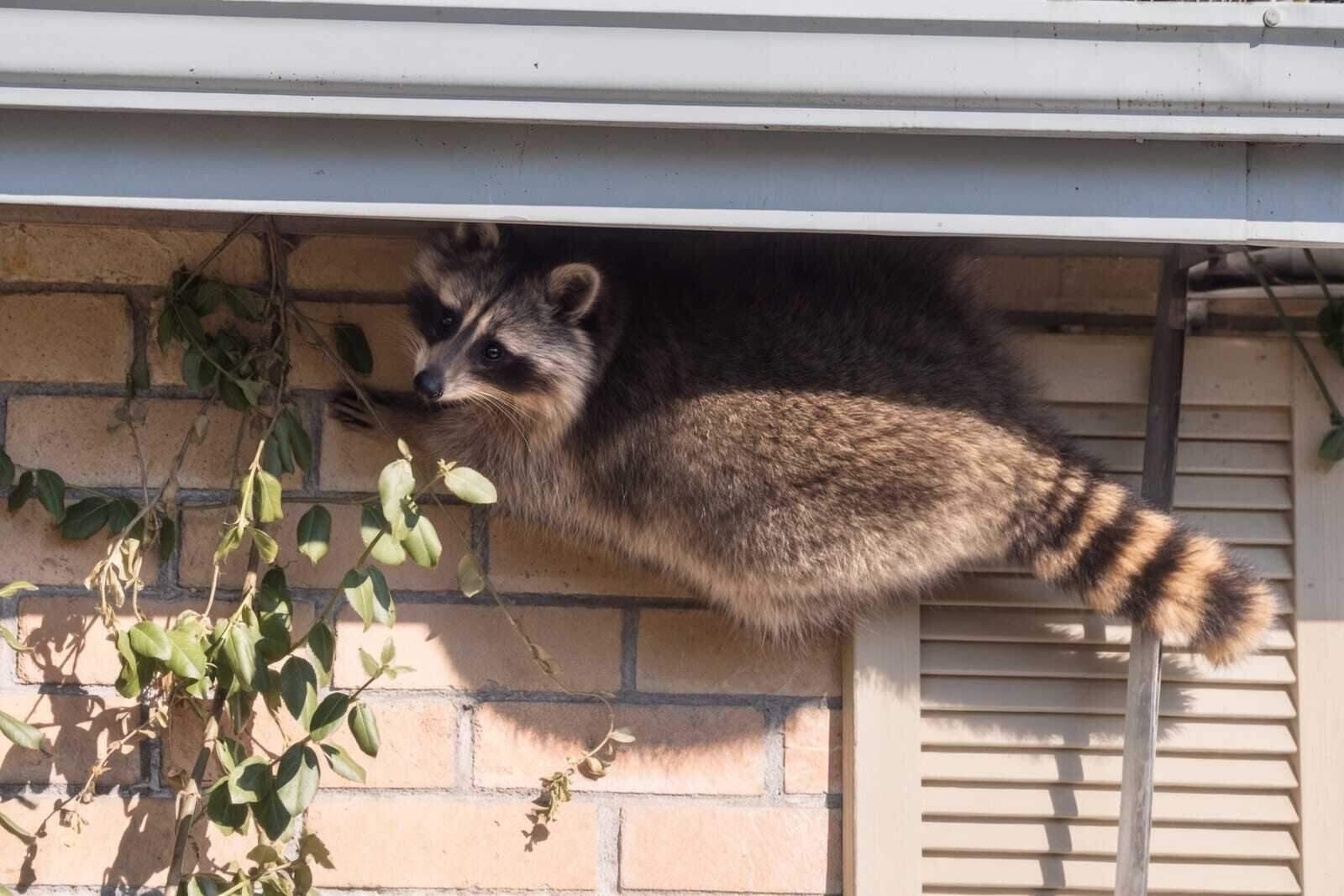
We remove wildlife from Dallas homes, attic to crawl space: raccoons, squirrels, opossums, skunks, bats, birds and snakes, plus moles in the yard.
Our wildlife removal services start with an inspection that finds the way in and names the animal, because the method and the Texas rules differ by species. Each animal then goes out the way its species needs, most often through a one-way door. Only after that is the way in closed and the attic cleaned.
You hear the price after the inspection, and nothing is set or sealed until you say yes. The findings come to you in writing after the visit: what we found, what we used and where.
We answer 24/7, nights and weekends included.
 LicensedIn the state
of Texas InspectBefore any
treatment WrittenReport after
the visit
How Our Animal Removal Works, Step by Step
-
1
Call and say where it is
Tell us what you have heard or seen: scratching over a bedroom, a smell in one wall, a hole at the roofline. We also ask about children and pets.
-
2
Inspect the house, roof to ground
The wildlife inspection covers the attic, the crawl space if the house has one, the roofline and soffits, the vents and the chimney. Outside, the technician checks under decks and sheds and marks every way in.
-
3
Hear what it is and what it costs
Droppings, tracks and the shape of the opening show which animal it is. The technician explains the method that fits it and gives the price of the wildlife removal; work starts only after your yes.
-
4
Get the animal out
The technician fits the one-way door or sets the trap the species calls for, then checks it until the animal is out. With bats in summer, this step waits for the young to fly.
-
5
Close the way in and clean up
Every opening marked in step 2 is closed, and the droppings and soiled insulation are cleaned out of the attic.
-
6
Your findings, in writing
They name the animal and the way it got in, then list what was used and where, including each opening we closed.
To set up the wildlife inspection, call (972) 573-9907 at any hour.
Which Animal Is It?
Each animal gets in its own way, and we get each one out the way its species needs.
Raccoons, Squirrels, Bats and More in DFW Homes
Wild animals get into DFW houses through the same few openings, and our inspection checks each one:
- Where the roof meets the house. Dallas Animal Services tells residents to repair rotted boards, warped siding and loose shingles along that line. Each gap there is a way into the attic for squirrels, raccoons and bats.
- Vents. Gable, ridge and crawl space vents need heavy-gauge, rustproof wire mesh over them, the city adds, not chicken wire. Birds nest in the ones left open.
- The chimney. Without a secure cap, it is an open shaft from the roof into the house.
- Under porches, decks and sheds. Opossums, skunks and snakes settle at ground level. Frisco lists the space under porches, along with attics, as places animals den.
Most DFW houses sit on a concrete slab, so an animal that gets inside usually ends up in the attic or the walls. Older pier-and-beam houses also have a crawl space under the floor.
Food and a place to den draw them to one house over the next. Frisco's list starts with garbage cans left uncovered and pet food set outside.
Removal First, Then the Way In Closed
The method is wildlife exclusion: the animal goes out first, through a one-way door wherever its species allows, and the openings are closed behind it. Each animal on our list goes out its own way:
- Raccoons, opossums and skunks leave through a one-way door or are taken alive in a cage trap.
- Squirrels mostly leave through a one-way door fitted over the hole they use.
- Bats fly out through one-way devices and cannot get back in. From May 1 to August 15 their young cannot fly yet, and Texas Parks and Wildlife (TPWD) discourages shutting bats out of a building in those months. The devices go up once the young can fly.
- Birds are screened out of vents and other openings. Native birds are protected by state and federal law, and a swallow nest may come down only when it holds no eggs or chicks. Starlings, house sparrows and feral pigeons are the exceptions.
- Snakes are caught with a snake tool or a funnel trap. Many Texas snakes are protected by state law, and Texas A&M advises contacting TPWD before a captured snake is moved.
- Moles are trapped in their tunnels in the yard.
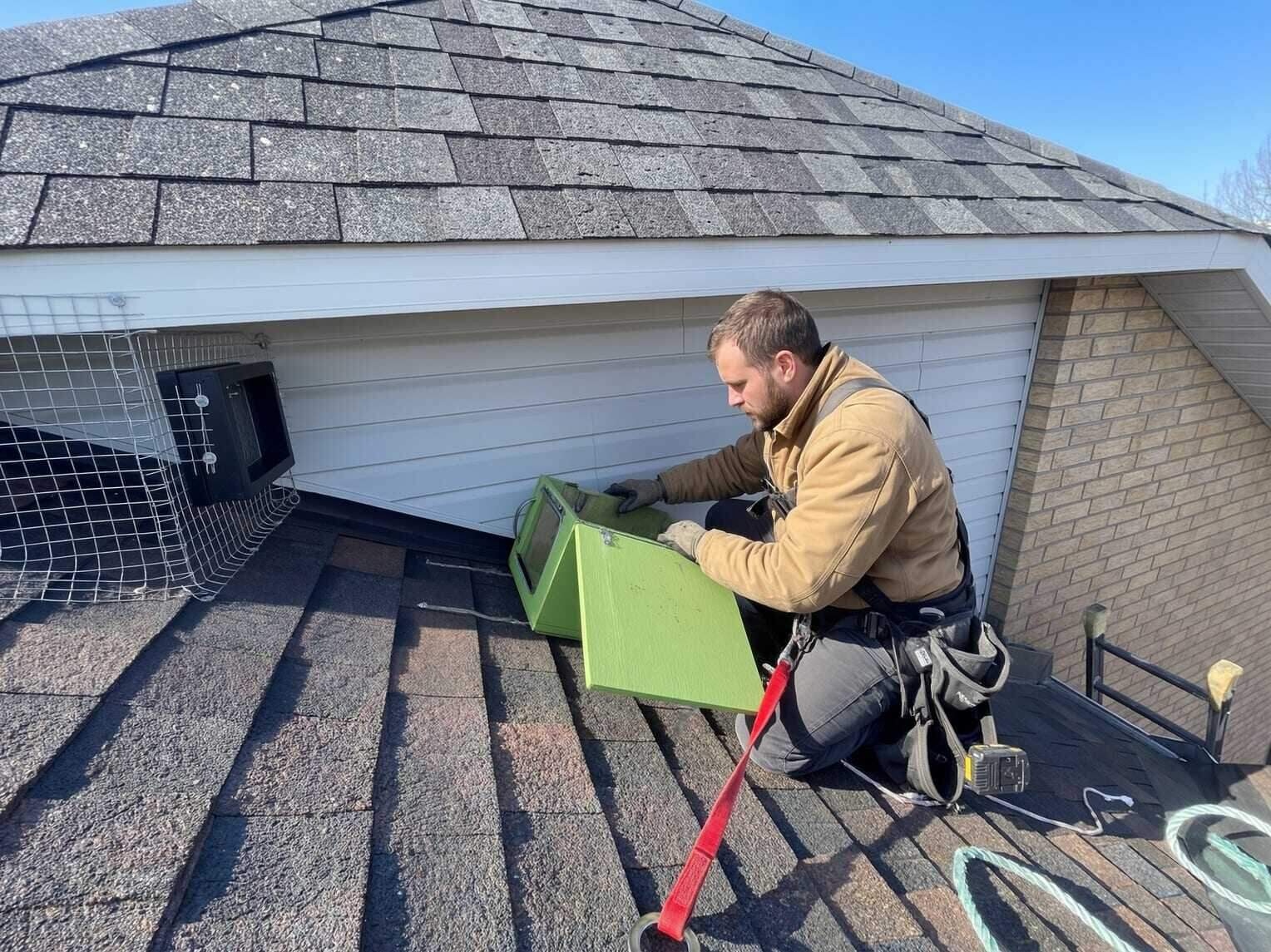
With the animals out, the openings are closed: hardware cloth over vents and gaps, steel flashing at the roofline and a cap on the chimney.
Animal removal on its own does not end the problem. Irving says trapping and removing wildlife “simply creates a vacancy for another wild animal to move in,” and Dallas, Arlington and Frisco say much the same. That is why our wildlife removal does not stop at the trap.
Where a one-way door works, nothing has to be moved. Arlington and Frisco both note that relocated wildlife rarely survives more than two weeks.
Signs of an Animal in the Attic or Walls
You will often hear an animal in the attic before you see one. Listen and look for:
- Scratching, scurrying or thumping in the ceiling or inside a wall. The time of day you hear it helps tell one animal from another.
- A hole or a chewed edge at the roofline, a torn vent screen or a soffit panel pushed loose.
- Droppings on the attic floor, or insulation that is flattened or torn up.
- Bats slipping out of a gap near the roof at dusk.
- Birds flying in and out of a vent, or nest material sticking out of it.
- A fresh hole dug under a porch, deck or shed, or raised ridges across the lawn where moles tunnel.
Leave what you find as it is: droppings, chewed edges and holes show the technician the way in. Keep children and pets away from the spot and call (972) 573-9907.
If the inspection finds roof rats instead, we handle those through our rat control service.
Wildlife Control Across Dallas–Fort Worth
DFW Pest Guard handles wildlife removal in Dallas, Collin, Tarrant and Denton counties, from Dallas and Fort Worth to suburbs like Plano, Irving and Arlington. Our wildlife control work is for homes only: houses, townhomes and apartments people live in.
The service areas page lists the cities we cover. To have a technician come out, call (972) 573-9907.
Questions About Animals in the House
How much does it cost to get an animal out of the attic?
The price comes once the inspection is done. The cost of wildlife removal depends on the animal, how many openings need closing and how much attic cleanup there is.
How long does it take?
The inspection visit usually takes 30 minutes to two hours, depending on the size of the house. How long the animal takes to leave depends on the species and the method, and we tell you with the price. If bats turn up between May 1 and August 15, the exclusion waits until the young can fly.
Is it dangerous for my kids and pets?
It can be, so keep them away from the animal. Dallas Animal Services warns that many wild animals carry diseases people and pets can catch, and says not to feed, touch or try to catch one. The CDC counts more than 90% of reported animal rabies cases in the U.S. in wildlife, bats, raccoons and skunks among them. Rabies spreads mainly through bites and scratches, so wash any bite or scratch right away with soap and water. Texas and the City of Dallas require rabies shots for pets.
Can I trap it myself?
For a squirrel, yes: Texas A&M notes that tree squirrels may be cage-trapped where they cause damage. Bats, native birds and many snakes come with their own Texas rules, and moving a live raccoon takes authorization from TPWD. A trap also leaves the hole open for the next animal.
Will the city come and take it away?
Usually not, if the animal is healthy. Dallas Animal Services does not trap healthy wildlife that poses no threat, and Plano says the same. Dallas points residents to private pest control or humane wildlife exclusion companies instead. Fort Worth no longer picks up wild animals or lends traps. For a sick, injured or dangerous animal in Dallas, call 311.
What if it rains?
Rain does not stop the inspection, since much of it happens in the attic and the crawl space. One-way doors and repairs go on the outside of the house, and a heavy storm can move that part to a dry day.
What should I do before you come?
Leave the opening alone, even if you can see it: blocking it before the animal is out shuts the animal inside. Note when you hear the noise, and make sure the attic hatch and any crawl space opening are easy to reach.
Get the animal out. Then close the door behind it.
Call us day or night. The inspection comes first, and the price before any wildlife removal starts.