
Ant Control in Dallas, TX
Pest control for ants in houses, townhomes and apartments across Dallas–Fort Worth.
- Fire, carpenter and crazy ants
- Baits carried back to the colony
- The price before any work starts
- A person answers, 24/7
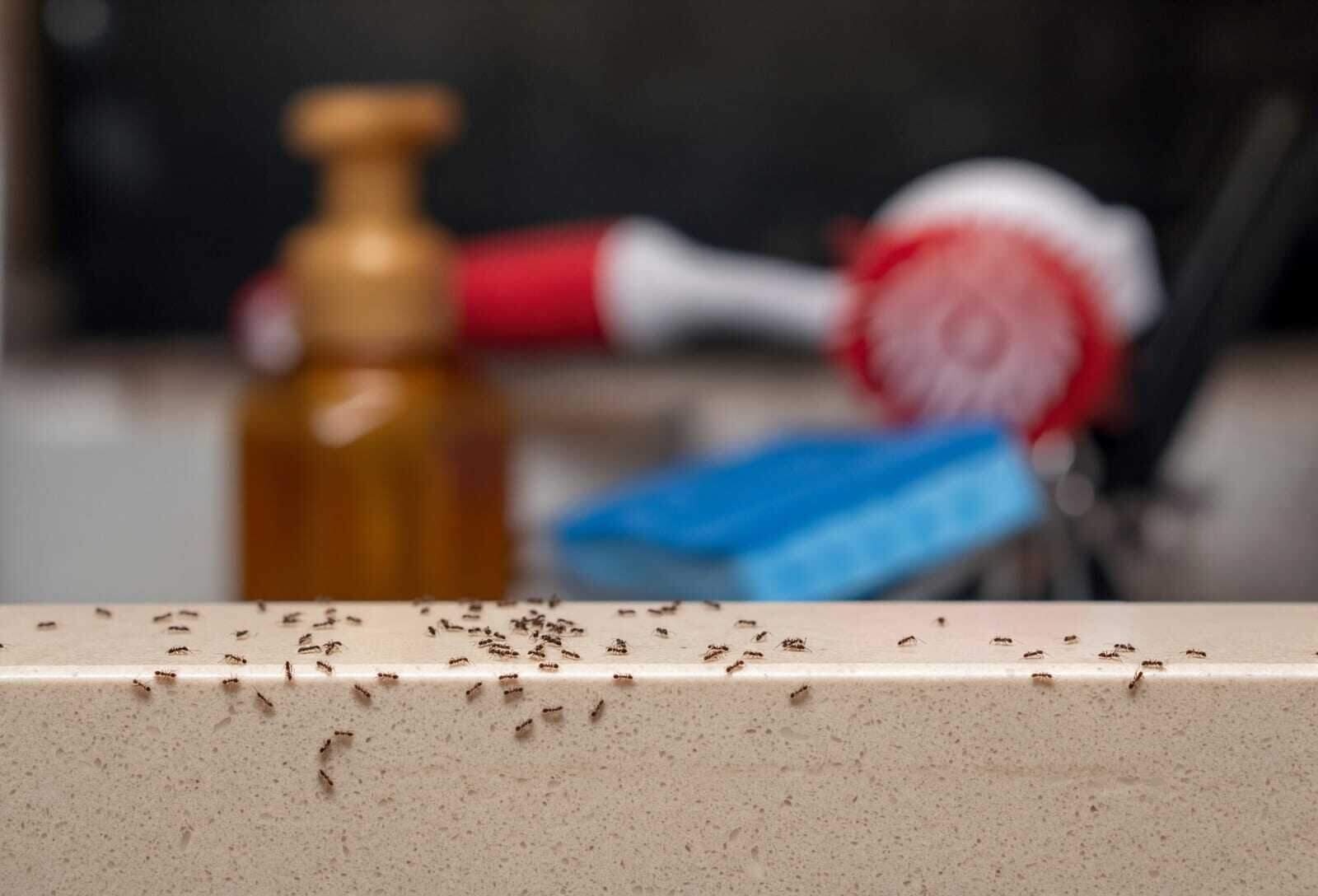
Ant Exterminator Service for Dallas Homes
Our ant control starts by naming the species and finding the nest, since fire ants, carpenter ants and crazy ants are not treated the same way.
An ant exterminator visit covers the house and the yard: bait where the ants feed inside, and a band of residual spray around the foundation outside. You hear the price before any of it starts.
After the visit, the findings come to you in writing: which ant it was, what was used and where it was applied.
We carry the liability insurance the state requires.
 LicensedIn the state
of Texas InspectBefore any
treatment WrittenReport after
the visit
How We Get Rid of Ants, Step by Step
-
1
Call us
Tell the person who answers what you are seeing and where: a mound by the driveway, a trail along the kitchen counter, or large black ants near a window.
-
2
Find the ant and its nest
The technician identifies the species, then follows the trails inside and out to where the ants enter and where they nest. The right bait depends on the species, so this comes first.
-
3
Go over the plan and the price
You see which ant it is, where the colony sits and what goes where. Then you hear the price. Nothing is applied until you say yes.
-
4
Bait inside, spray outside
The technician baits the trails inside, treats any nest within reach, then sprays a band along the foundation outside. An ant treatment visit typically takes 30 to 90 minutes.
-
5
Write up the findings
The written findings name the ant, the products used and where each one went, plus what to leave alone while the bait works.
To book the inspection, call (972) 573-9907 any time, day or night.
Ant Baits and a Perimeter Treatment
Indoors, the main tool is ant bait. Foraging workers carry it back to the colony, so it reaches a nest inside a wall that nobody can see or spray.
Bait goes along the trails, and granular bait goes into wall voids where a trail disappears. A nest within reach is dusted directly. Where the nest is out of reach, a non-repellent product goes on the surfaces the ants walk: they do not avoid it, so they keep crossing it.
Fire ant mounds in the lawn get bait too, and the workers carry it down into the mound.
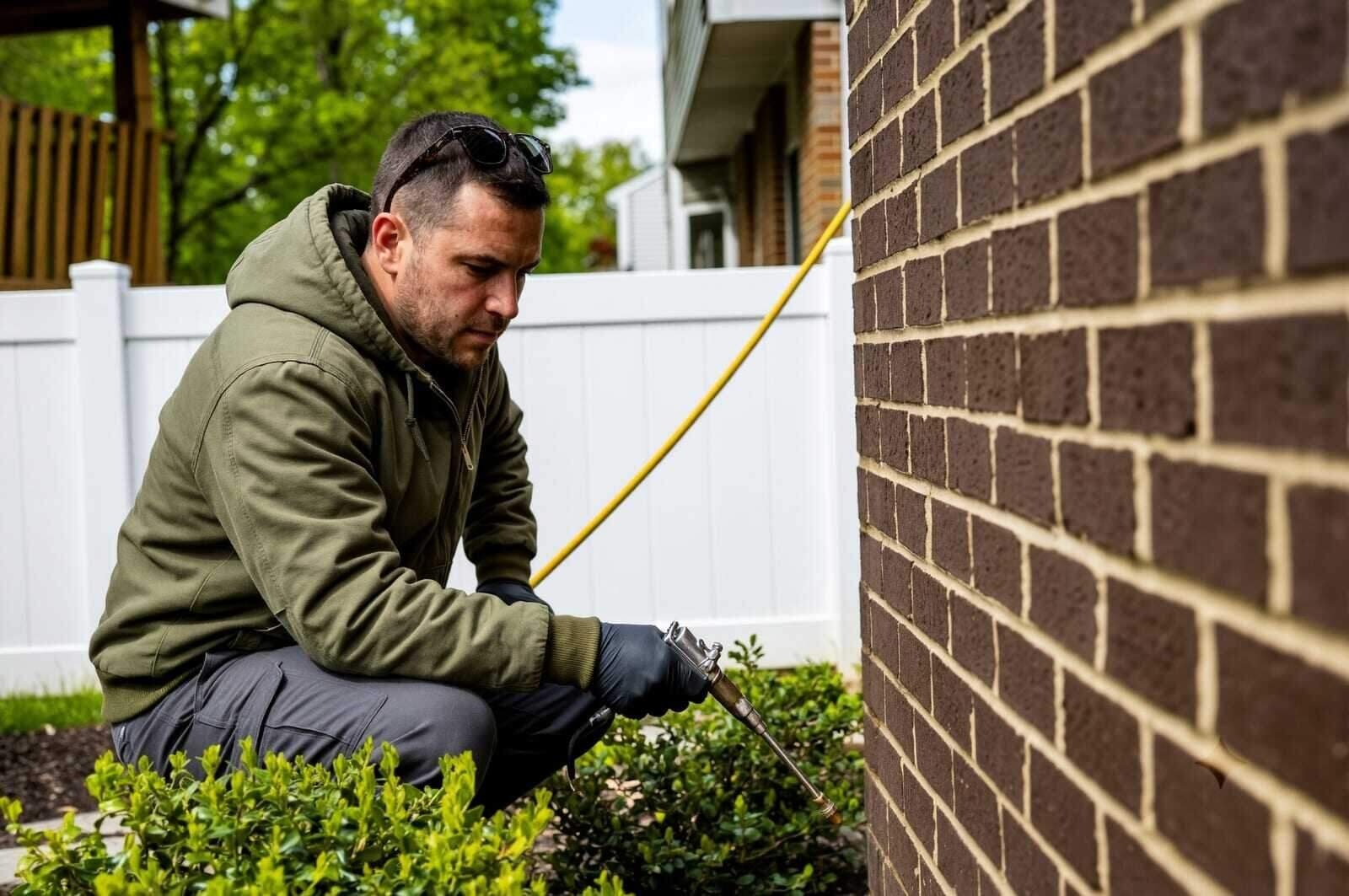
The perimeter treatment is the outdoor half: a band of residual spray on the soil and the lower walls around the foundation. Ants coming in from the yard cross it on their way to the house.
Fire Ants, Carpenter Ants and Crazy Ants in DFW
Most houses in Dallas–Fort Worth sit on a concrete slab. Ants get in through cracks in it and through the gaps where pipes enter. Where the colony lives depends on the species:
- Fire ants build mounds in open lawn, along sidewalks and next to the slab. They sting, and a mound by the house can send workers inside through a crack.
- Carpenter ants are the large black ants. They nest in damp or damaged wood, such as a leaking window frame or rotted trim, and tree limbs on the roof give them a way up.
- Crazy ants are small and dark and run in jumpy paths instead of straight lines. They nest under mulch, stones and clutter against the house and can come indoors in large numbers.
- The tiny ants people call sugar ants belong to several other species, and we name yours before choosing a bait.
Flying ants at a window come from a colony in or near the house. Termite swarmers look much like them, and the technician tells the two apart by the waist and the wings.
Keeping Ants Out After the Visit
Bait works only while the ants keep taking it. Leave it where it was placed, even if more ants show up for a few days.
While the bait is out, do not spray store-bought ant killer on the trails. A spray can split one colony into several and keeps the ants away from the bait.
For the longer run, a few changes make the house harder to get into:
- Pull mulch back from the foundation.
- Caulk the cracks the trails came through.
- Trim tree limbs off the roof.
If ants are still coming in a month after the visit, call us.
Ant Control Across Dallas–Fort Worth
We send an ant exterminator to homes in Dallas, Collin, Tarrant and Denton counties. That takes in Dallas, Fort Worth and the suburbs between them, such as Plano and Grapevine.
We work in homes only: houses, townhomes and apartments people live in. Call (972) 573-9907 to book the inspection, or find your city on the service areas page.
Questions About Ant Treatment
How much does it cost?
You hear the price after the inspection, before any work starts. Pest control for ants is priced by the species, how many nests and trails there are, and whether the yard needs bait too. None of that can be judged over the phone.
How long until the ants are gone?
Most colonies collapse within one to two weeks, and some take three to four. For the first few days you may see more ants, not fewer, while the workers carry the bait home.
Is it safe for kids and pets?
Indoors, the bait goes into cracks, wall voids and spots along the trails that children and pets cannot reach. The spray band stays outside, and the technician tells you when it is dry enough to walk on. Mention a baby, a pet or a health condition when you book.
Can I get rid of them myself?
You can kill the ants you see, but store sprays rarely reach the nest, and a spray can split one colony into several. Professional ant control starts at the nest: the species decides the bait, and the trails show where it goes.
Is there a natural option?
Yes. Our organic pest control uses botanical products instead of conventional ones. The inspection shows whether it suits your ants.
What if it rains after the visit?
The bait indoors is out of the weather. Outside, the spray band holds up to ordinary rain once it has dried. A downpour before that can wash it off, so heavy rain in the forecast can move the outdoor part to another day.
What should I do before the technician comes?
Leave the trails alone and stop using store-bought ant spray a few days ahead, so the ants still lead the way to the nest. Clear the cabinets under the sinks, and move anything stacked against the house where you have seen ants.
You see the trail. The bait is for the nest.
One call books the inspection: which ant you have, where it nests and what ant control will cost for your house.