
Termite Control in Dallas, TX
Termite treatment for houses and townhomes across Dallas–Fort Worth.
- Liquid treatment along the whole foundation
- Subterranean and Formosan termites
- The price before any work starts
- A person answers, 24/7
Termite Control Services for Dallas Homes
Our termite control starts with an inspection of the whole house, and you hear the price before any work begins. The treatment is a liquid termiticide in the soil along the foundation, and the findings come to you in writing after the visit.
We treat subterranean termites, which nest in the soil. Across DFW, the main one is the eastern subterranean termite.
The Formosan subterranean termite turns up far less often. Texas A&M AgriLife Extension lists it in more than 30 Texas counties, DFW counties among them, and it gets the same treatment.
We carry the liability insurance the state requires.
 LicensedIn the state
of Texas InspectBefore any
treatment WrittenReport after
the visit
How Our Termite Treatment Works, Step by Step
-
1
Call us
Tell the person who answers what you found and where, for example a mud tube on a garage wall or wings under a window. The technician starts there.
-
2
Inspect the whole house
The technician walks the foundation all the way around, where mud tubes show first, then checks the rooms and the attic.
-
3
Go over the findings and the price
You see which termite it is and where it reaches the wood, such as a crack in the slab or the gap around a pipe. Then you hear the price and what it covers. Nothing is drilled or dug until you say yes.
-
4
Treat the soil
A liquid termiticide goes into the soil all along the foundation. On a typical house, termite treatment takes a few hours to most of a day, depending on its size and how much concrete has to be drilled. You can usually stay home.
-
5
Put the findings in writing
The written findings list what was found and which product went where. Before leaving, the technician also points out anything that could let termites back in, like firewood stacked against a wall.
To find out what your house needs, book the inspection at (972) 573-9907.
Three Termite Myths That Do Not Hold Up
What you have read
“Brick houses don’t get termites.”
What is actually true
Termites do not eat brick. On a slab house they come up through a crack or along the slab edge behind the veneer, then eat the framing inside the wall. The brick only hides the damage longer.
What you have read
“No swarmers means no termites.”
What is actually true
Swarmers fly on a few spring days, often while nobody is home, and a young colony may not swarm at all. Mud tubes stay on the foundation all year.
What you have read
“Dry, empty tubes mean the termites are gone.”
What is actually true
A dry, crumbling tube may be an old one, and the colony may simply have moved to a new route along the slab. That is why the inspection covers the whole foundation, not only the tube you found.
The Liquid Soil Treatment We Use
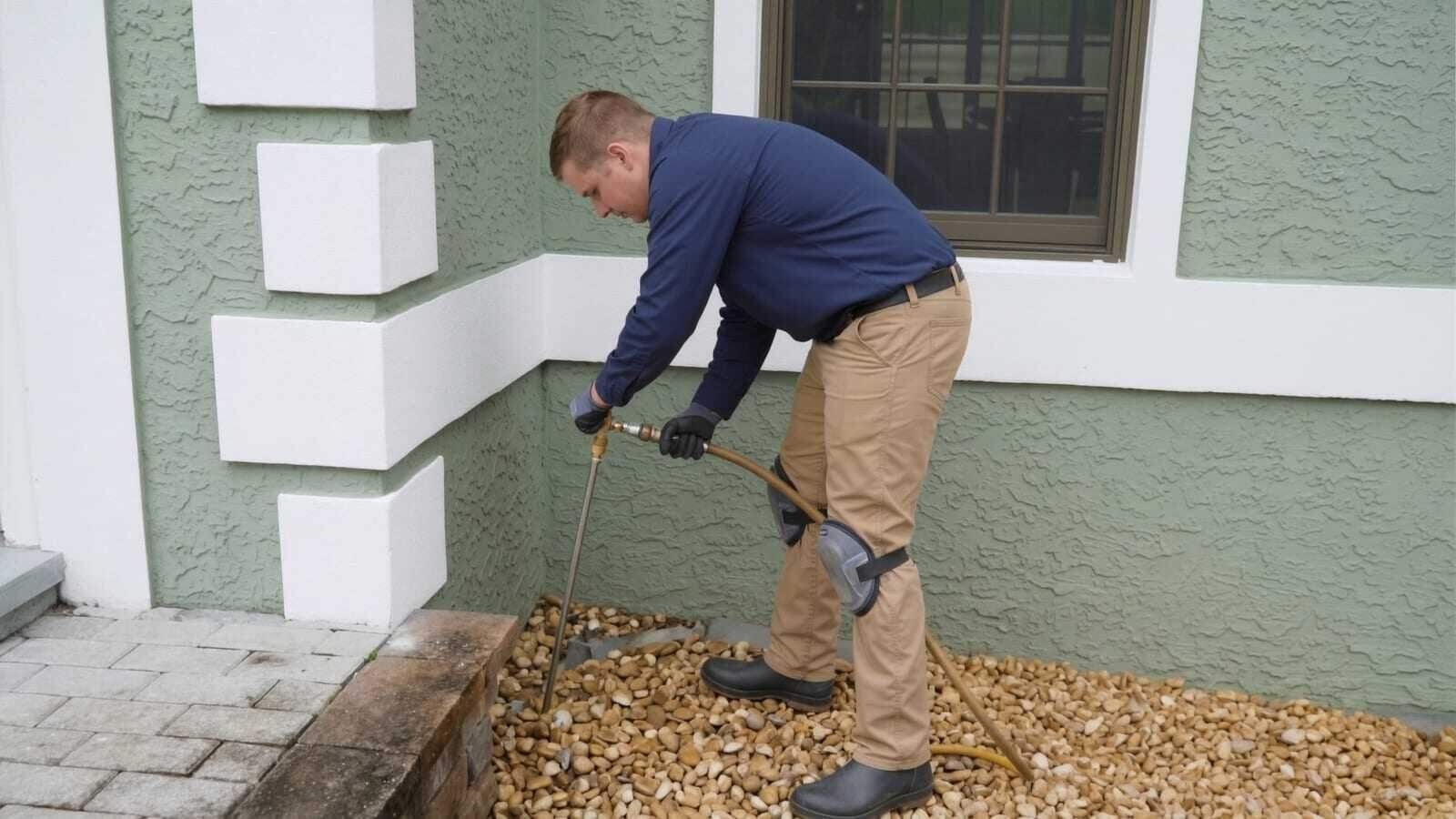
DFW Pest Guard uses one method for termite control: a liquid termiticide in the soil along the entire foundation. Subterranean termite treatment goes into the soil because that is where these termites live: they travel through it to reach the wood, so treated soil against the house lies across their path.
The technician digs a shallow trench against the foundation, pours the liquid in and pushes it down toward the footing with a long rod. Where a driveway or patio covers that soil, the termiticide is injected through small holes drilled in the concrete, and the holes are patched afterward. The treated strip does not stop where the concrete starts.
How Termites Get Into DFW Houses
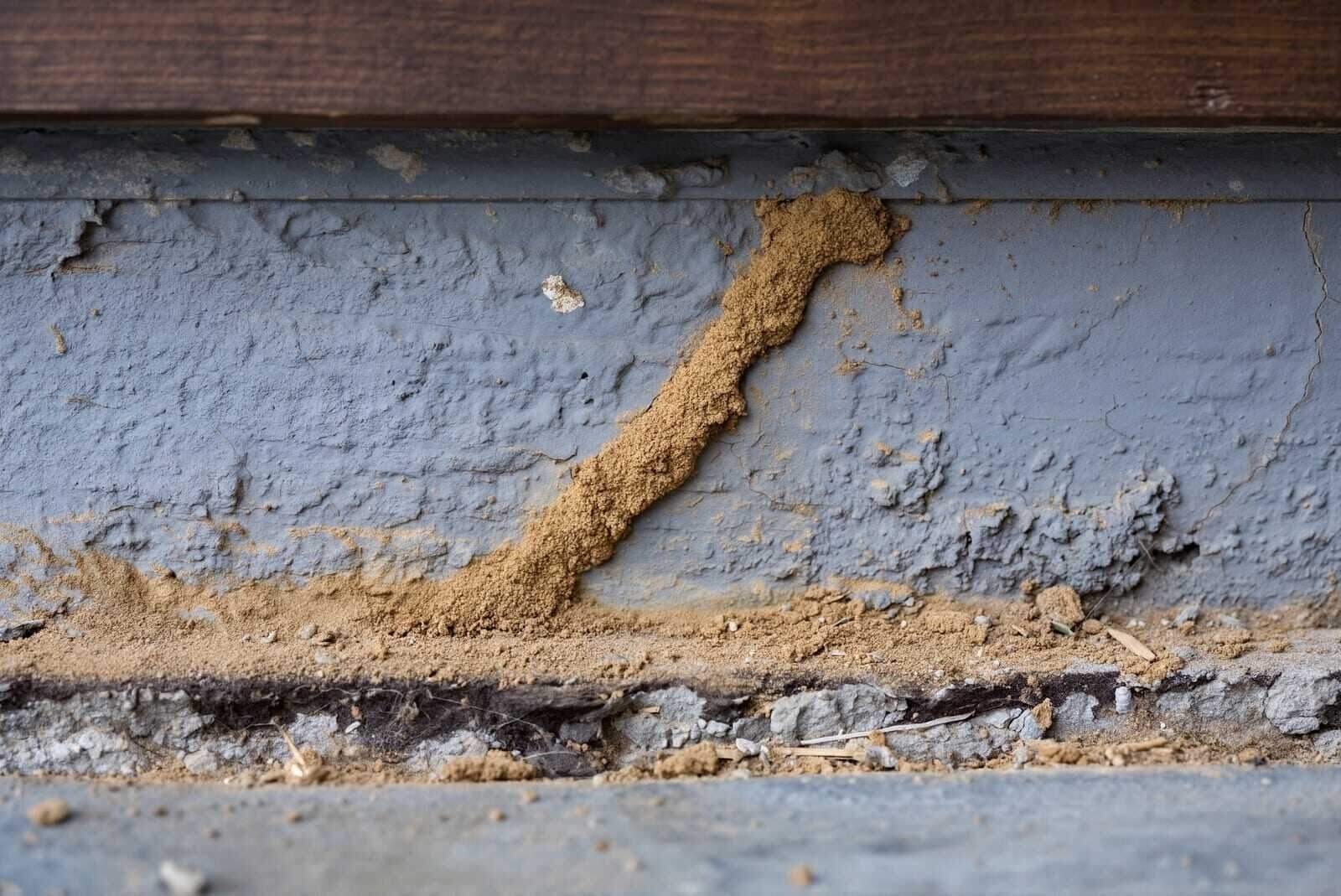
Most houses in Dallas–Fort Worth stand on a concrete slab, and termites cannot eat concrete. They build mud tubes up the outside of the slab or come up through a crack in it. Wood that touches both the soil and the house gives them a bridge as well. Under older pier-and-beam houses, the tubes climb the piers.
In Dallas, termites swarm from February through May, most heavily in late March and early April, usually on a warm day after rain. A pair of swarmers that lands in soil kept damp by a sprinkler or a downspout can start a new colony right next to the foundation.
Formosan termites spread in recycled timbers and railroad ties used for landscaping. If old ties edge your flower beds, point them out to the technician.
Signs of Termites in Your Home
Any one of these is worth a call:
- Wings, or whole winged termites, on a windowsill or near an indoor light.
- Mud tubes on the foundation, or around a pipe where it enters the house.
- Baseboards or door frames that sound hollow or give under a thumb.
- Paint that bubbles or cracks along a line, and doors that start to stick.
Found one? Leave it where it is, because tubes and wings show the technician where termites are active. Call (972) 573-9907 any time, day or night, to book the inspection.
Keeping Termites Out After the Visit
The treated soil keeps working only while it stays in place. Planning a new flower bed, a patio or anything else that means digging against the house? Call us first, because moving that soil moves the treatment with it.
Keep mulch a few inches below the top of the slab, so a new mud tube is easy to spot. Point sprinklers and downspouts away from the house, too. If one of the signs above shows up later, book an inspection.
Termite Control Across Dallas–Fort Worth
DFW Pest Guard offers termite services in Dallas, Collin, Tarrant and Denton counties. That area takes in Dallas, Fort Worth and the suburbs between them, such as Arlington and Irving. We are a termite and pest control company for homes, not businesses.
Anywhere in those four counties, call (972) 573-9907 to book the inspection, or check your city on the service areas page.
Questions We Hear on Termite Calls
How much does it cost?
You hear the price after the inspection, before any work starts. The cost of termite control depends on the length of your foundation and on how much of it runs under a driveway or patio. Neither can be measured over the phone.
How long does the treatment last?
A liquid termite treatment is made to last for years in soil that stays undisturbed. How long yours lasts depends on the soil and on the product, and the written findings name the product used.
How do you check for termites?
By what they leave behind, since the termites themselves stay hidden in the soil and inside the wood. Mud tubes on the foundation are the clearest sign. We also tap baseboards and door frames and listen for wood that sounds hollow.
Is it safe for kids and pets?
The product goes into the soil outside, not onto floors or furniture. Keep children and pets off the treated strip by the house until it dries; the technician tells you when before leaving. If anyone at home has a health condition, mention it when you book.
Can I treat termites myself?
You can, but coverage is the hard part. The termiticide has to reach the soil along every foot of the foundation, even under concrete. A store product usually ends up only where the tubes showed, and the colony can then come up somewhere else. Professional termite control covers the whole foundation, and that coverage is what you pay a termite exterminator for.
What if it rains after the treatment?
Once the liquid has soaked into the soil, rain does not wash it out. Heavy rain before or during the work is another matter, and a downpour in the forecast can move the visit to another day.
What should I do before the exterminator comes?
Clear the way to the foundation, outside and in the garage. Move firewood, storage bins and anything else stacked against the house, so the technician can see the bottom of every wall.
Swarms last a few spring days. The colony works all year.
The inspection shows where the colony comes up and what termite treatment will cost for your house. Booking it takes one phone call.