
Rodent Exclusion in Dallas, TX
Rodent proofing for Dallas–Fort Worth homes: the ways mice and rats get in, closed with metal.
- Every opening, slab to roof
- Hardware cloth, flashing, copper mesh
- Weep holes covered, still draining
- A person answers, 24/7
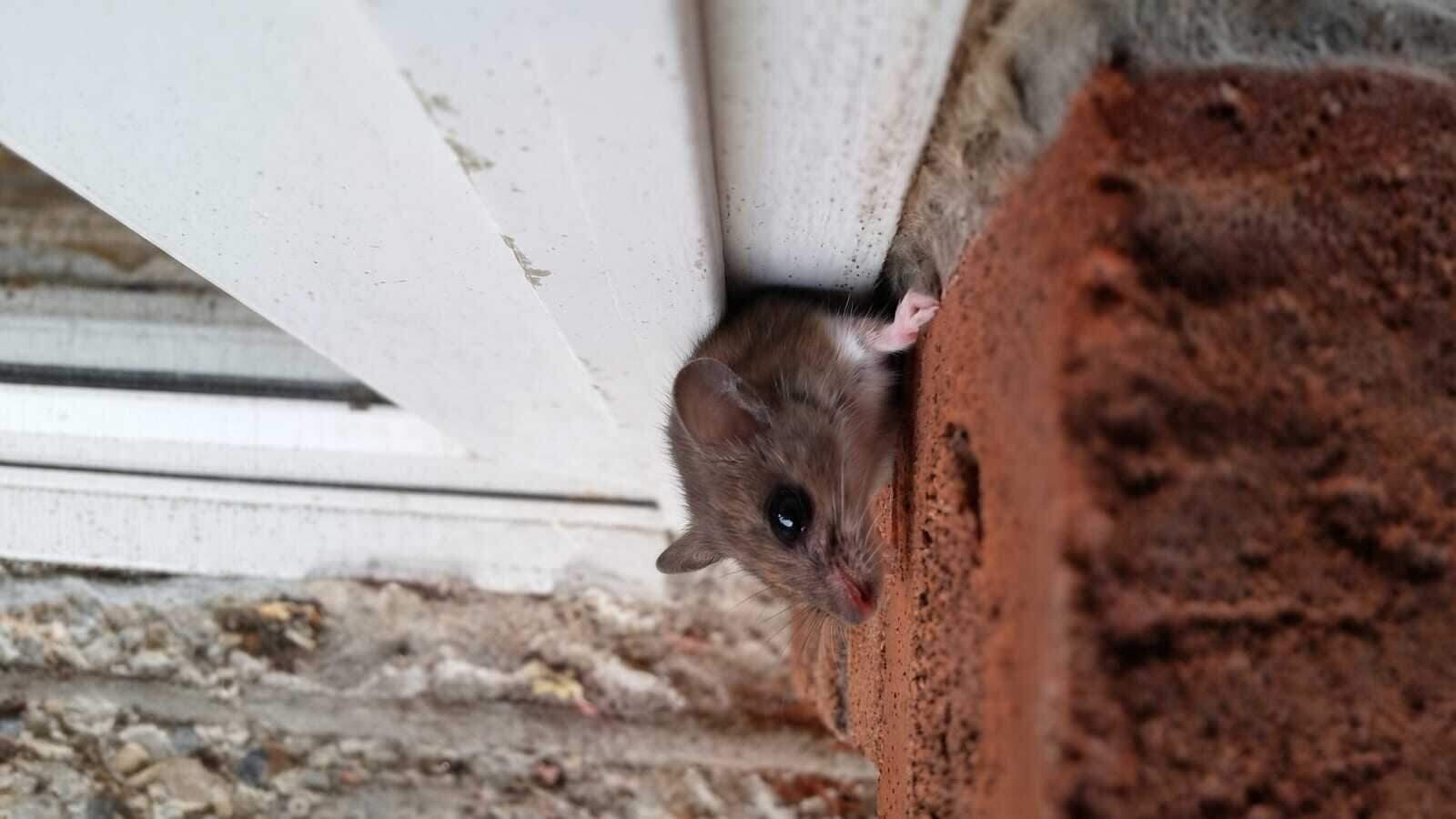
Rodent Exclusion Services for Dallas Homes
Our rodent exclusion seals the whole house so the next mice and rats have no way in. A technician walks it from the slab to the roofline and maps every opening a rodent can use; each one is closed with metal and checked afterwards.
Clearing out the mice or rats already inside goes with it, and that part is our rodent control service. People call us for a seal-up after a round of trapping, before the fall, after buying a house, or when mice keep coming back.
The price comes after the inspection and before any work, and nothing is sealed until you say yes. When the sealing is done, the findings come to you in writing: what was found, what was used and where it went.
We answer the phone 24/7.
 LicensedIn the state
of Texas InspectBefore any
treatment WrittenReport after
the visit
How the Seal-Up Works, Step by Step
-
1
Tell us what you have noticed
Call us and say what you found and where. Droppings by the garage wall point low, while footsteps in the attic at night point to the roofline. We also ask about pets.
-
2
A walk from the slab to the roof
The technician works up from the weep holes and the garage door to the vents, the roof returns and the chimney. Inside, we check the rooms, the garage and the attic, and in the attic we look for bats and nesting birds that a closed gap could shut in.
-
3
The list of openings, with the price
Each opening goes on a written list with the metal that will close it, and the list carries the price. The work starts after your yes.
-
4
Every opening closed with metal
Rodent proofing most houses takes a day or two. Any mice or rats still inside are trapped meanwhile, through our rodent control. A roofline gap that bats are using stays open from May 1 to August 15, while their young cannot fly, as Texas Parks and Wildlife advises.
-
5
A check, then the findings in writing
Afterwards the technician checks that nothing new got in: no fresh droppings, no gnawing at a patch. The written findings also name what draws rodents to the house, such as firewood stacked against a wall.
Call (972) 573-9907 to book the inspection, day or night.
Is Rodent Proofing Worth It?
Yes, once mice or rats have found a way in. Rodent proofing closes the openings the next ones would use, though it does not clear the ones already inside; traps do that, alongside the seal-up.
“The traps already caught them.” The openings they used are still there, so each mouse caught leaves room for the next. Seal Up comes first in the CDC's three rodent steps, ahead of Trap Up and Clean Up.
“I already filled the holes.” Foam, caulk and steel wool give way, and rats get through foam and steel wool within a season. Metal holds, so every gap we close gets metal.
“Traps cost less.” Per round, yes. Without a seal-up, though, the trapping starts again every season new rodents find the same gaps.
Where Mice and Rats Get Into DFW Houses
Mice come in near the ground, and roof rats at the roofline as well. A gap of about 1/4 inch, the width of a pencil, lets a house mouse in; a rat needs a little over 1/2 inch.
- Weep holes. The open slots at the base of the brick, especially behind shrubs and flower beds.
- The garage door. Its two bottom corners, gaps in the frame and trim that has pulled away.
- Lines through the wall. Pipes, cables, the gas line and the A/C line set, which is often packed with foam and never closed with metal.
- Dryer and crawl space vents. A dryer vent with a broken flap, and the vents of an older pier-and-beam house with a crawl space underneath.
- The roofline. Roof returns, where the roof meets the brick; attic, gable and ridge vents with torn screens; gaps at the soffits, the chimney and the plumbing stacks.
A dry summer adds gaps of its own. DFW's expansive clay shrinks as it dries, and separations open where pipes go through the slab, along the brick veneer and at the utility lines.
What Each Opening Is Sealed With
Rats and mice gnaw through wood, rubber, vinyl, plastic and even aluminum sheeting, so none of those is the barrier in our rodent exclusion:
- Attic, gable and crawl space vents. Galvanized hardware cloth, 16 to 19 gauge, with a 1/4-inch mesh. A 1/2-inch mesh stops rats but lets mice through.
- Roof returns and gnawed edges. Galvanized sheet metal or flashing, 24 gauge or heavier. Rats chew through aluminum, so the sheet is steel.
- Gaps around pipes, cables and the A/C line set. Copper or stainless steel mesh, packed tight and held with sealant. It fills openings under 3/4 inch that nothing else fits.
- Weep holes. Weep-hole covers, so the water still drains out of the brick.
- Doors. A tight door sweep with metal along the lower edge, leaving less than 1/4 inch, on the door from the garage as well.
- The garage door. A tension brush or a heavy-duty compression seal along the bottom. Rubber and vinyl weather stops go quickly.
- The dryer vent. The gap to the wall is sealed, and the cover gets a working flap or a floating ball. Fine screen would clog with lint and raise the fire risk.
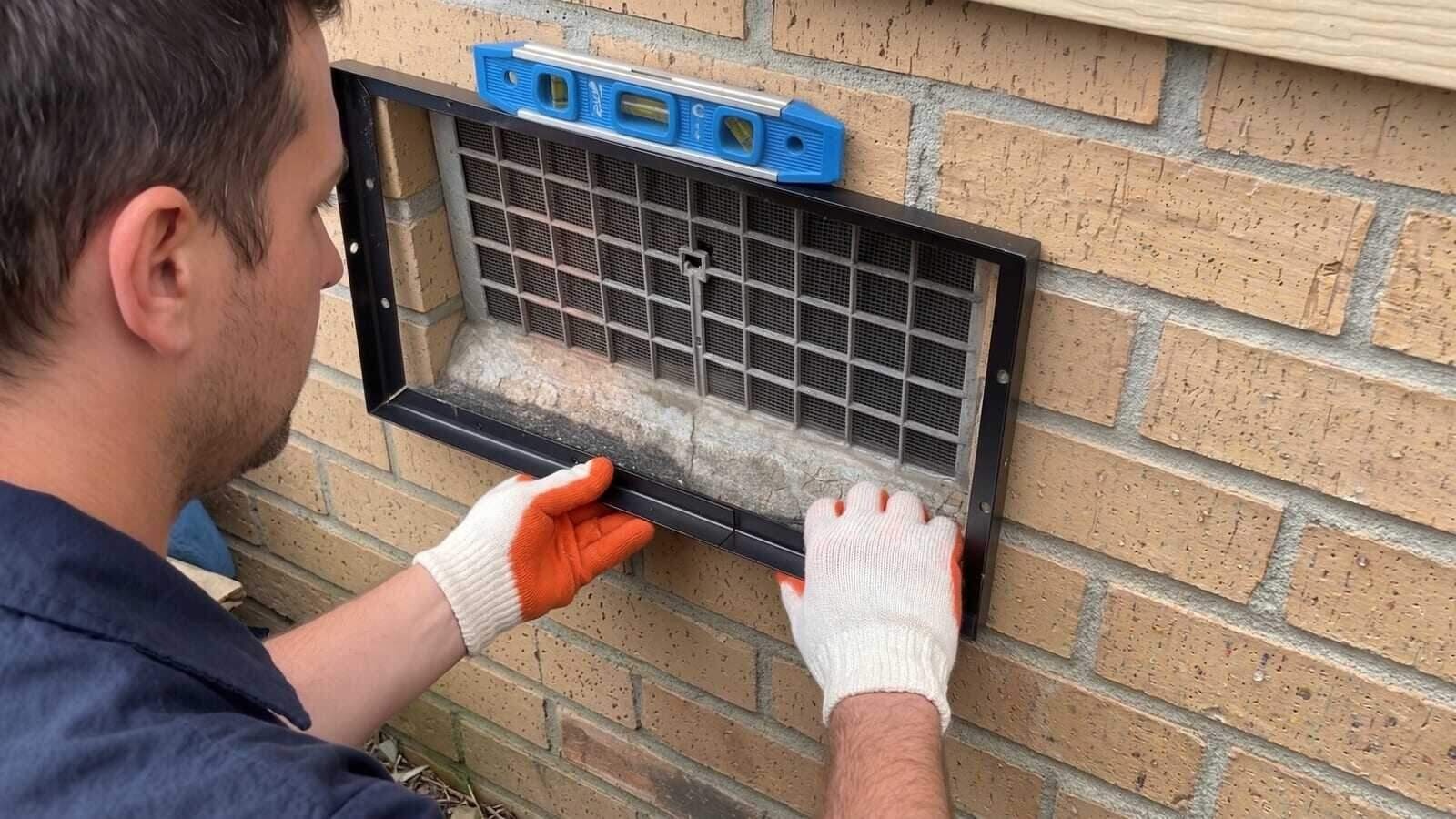
Signs Rodents Are Still Getting In
Any of these means a way in is still open, even after a round of traps or an earlier seal-up:
- Fresh droppings where you already cleaned, weeks after the traps went quiet.
- Footsteps or scratching above the ceiling after dark.
- An old patch of foam or steel wool, chewed open or pulled away.
- After a dry summer, a new crack where a pipe enters the slab, or a gap along the brick.
- Daylight under a bottom corner of the garage door.
Leave what you find in place, since it shows where the opening is. Keep children and pets away from it. Rats and mice spread disease through bites, droppings, urine and saliva, and through food or air their waste has touched, the CDC says.
After a rodent job we clean the attic as well: droppings out, soiled insulation replaced. Call (972) 573-9907 and tell us what you found.
Rodent Proofing Across Dallas–Fort Worth
We offer rodent exclusion services in Dallas, Collin, Tarrant and Denton counties, from Dallas and Fort Worth to the suburbs between them. A brick house in Garland gets the same walk from the slab to the roof as one in Keller or McKinney.
DFW Pest Guard works on homes only: houses, townhomes and apartments people live in. Every town we cover is on the service areas page. For a seal-up at your address, call (972) 573-9907.
Questions About Sealing Out Rodents
When is the best time of year to seal up a house?
Late August through September. A dry summer has opened its new gaps by then, and the first cool front has not yet sent mice indoors. By November, mice have often moved in already.
How long does the work take?
A day or two on most houses, depending on the size of the house and how many openings are on the list. The inspection before it usually takes 30 minutes to two hours.
How long does a seal-up last?
The metal stays in place; Texas A&M AgriLife Extension calls rat-proofing the most permanent means of control. A dry summer can still open a new gap in the house, and that one needs sealing too.
Do you also trap the ones already inside?
Yes, trapping goes with the seal-up. Snap traps clear the mice or rats still in the house, and a gap they are using is closed once they are caught.
Why not just use steel wool or spray foam?
Neither lasts on its own. Plain steel wool rusts, and expanding foam breaks down in sunlight unless it is trimmed and painted. In small gaps we pack copper or stainless steel mesh instead.
Do the weep holes get sealed shut?
No. Weep holes let water drain from behind the brick, and closing them causes moisture trouble in the wall. Each one gets a cover that lets the water through and keeps rodents from getting in.
How much does it cost?
It depends on what the inspection finds: how many openings there are, and where. A few gaps at ground level cost less than a roofline that needs flashing all around.
Every way in found. Every one closed with metal.
Call to book the inspection and start with a written list of every way into your house.