
Raccoon Removal in Dallas, TX
Raccoon control for attics, chimneys and crawl spaces in Dallas–Fort Worth homes.
- Cage trap or one-way door
- Baby raccoons lifted out by hand
- Openings closed with galvanized steel
- A person answers, 24/7
Raccoon Removal Services for Dallas Homes
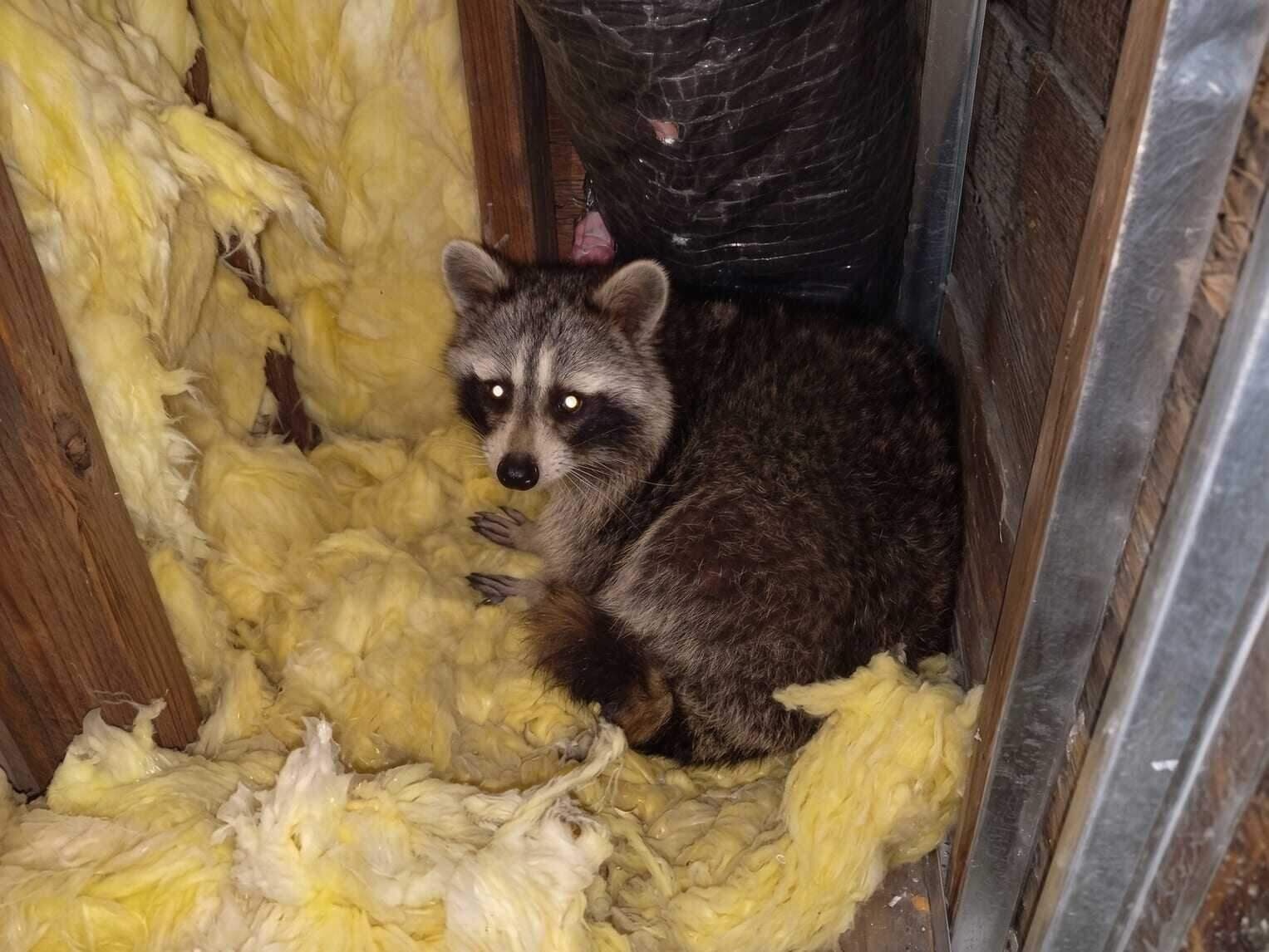
Every raccoon removal we do starts with an inspection of the roof, the soffits, the vents, the chimney and the attic. The technician finds the hole the raccoon uses, its den and any latrine, and listens for young.
You hear the price when the inspection is done, before any work starts. No trap goes up and no opening is closed until you say yes.
Our raccoon control gets the animal out with a cage trap or a one-way door. Once it is out, the way in is closed with galvanized steel and the latrine is cleaned up.
When the work is done, we write it up for you: where the raccoon got in, what was set and where, and which openings were closed.
Call us any time: we answer 24/7.
 LicensedIn the state
of Texas InspectBefore any
trap is set WrittenFindings after
the work
How We Get Raccoons Out, Step by Step
-
1
Call and tell us what you hear
We ask what you have heard or seen, and where: thumping over a bedroom at night, a torn soffit, droppings on the roof. We also ask about children and pets.
-
2
Find the hole, the den and the latrine
The technician checks the roof, the soffits, the vents and the chimney, then goes up into the attic. Under an older pier-and-beam house, the crawl space gets checked too.
-
3
Look at what we found
We show you the hole and the den, then give you the price. Nothing starts before your yes.
-
4
Get it out, then close it up
A cage trap goes up, or on some houses a one-way door goes over the hole, and any young come out with their mother. Then the openings are closed.
-
5
Keep the written record
Your write-up also names what brings raccoons to the yard, such as pet food left out overnight or fruit from a backyard tree.
Call (972) 573-9907 to book the inspection. We pick up at night too, when raccoons do most of their feeding.
Why Raccoons Move Into DFW Attics
An attic gives a raccoon a den, and the yards nearby supply the food. In town, Texas A&M AgriLife Extension says, raccoons den in attics, chimneys, woodpiles and under houses, and they eat pet food, fruit, garden vegetables and garbage.
They are common in towns but often go unnoticed, since most of their feeding happens at night. The City of Coppell calls a raccoon sighting not uncommon and no reason for alarm.
Late winter and spring bring the mothers. A female has one litter a year, three to five young, usually born in February or March. She looks for a safe den to raise them, and an attic, a chimney or a wall void fits.
Raccoons do not hibernate either. Coppell notes that they stay in their dens through the winter.
A raccoon climbs a tree, a downspout or the siding to reach the roof. It gets in through the shingles, a loose soffit, the eaves, a vent or a roof return.
Most houses in Dallas–Fort Worth sit on a concrete slab. An older pier-and-beam house adds a crawl space, one more place for a raccoon to move in.
Removing the Raccoon, Then Closing the Way In
DFW Pest Guard removes raccoons in two stages. Live trapping or a one-way door gets them out, and exclusion, which means closing every opening they used, keeps them out. Our raccoon pest control does not rely on repellents.
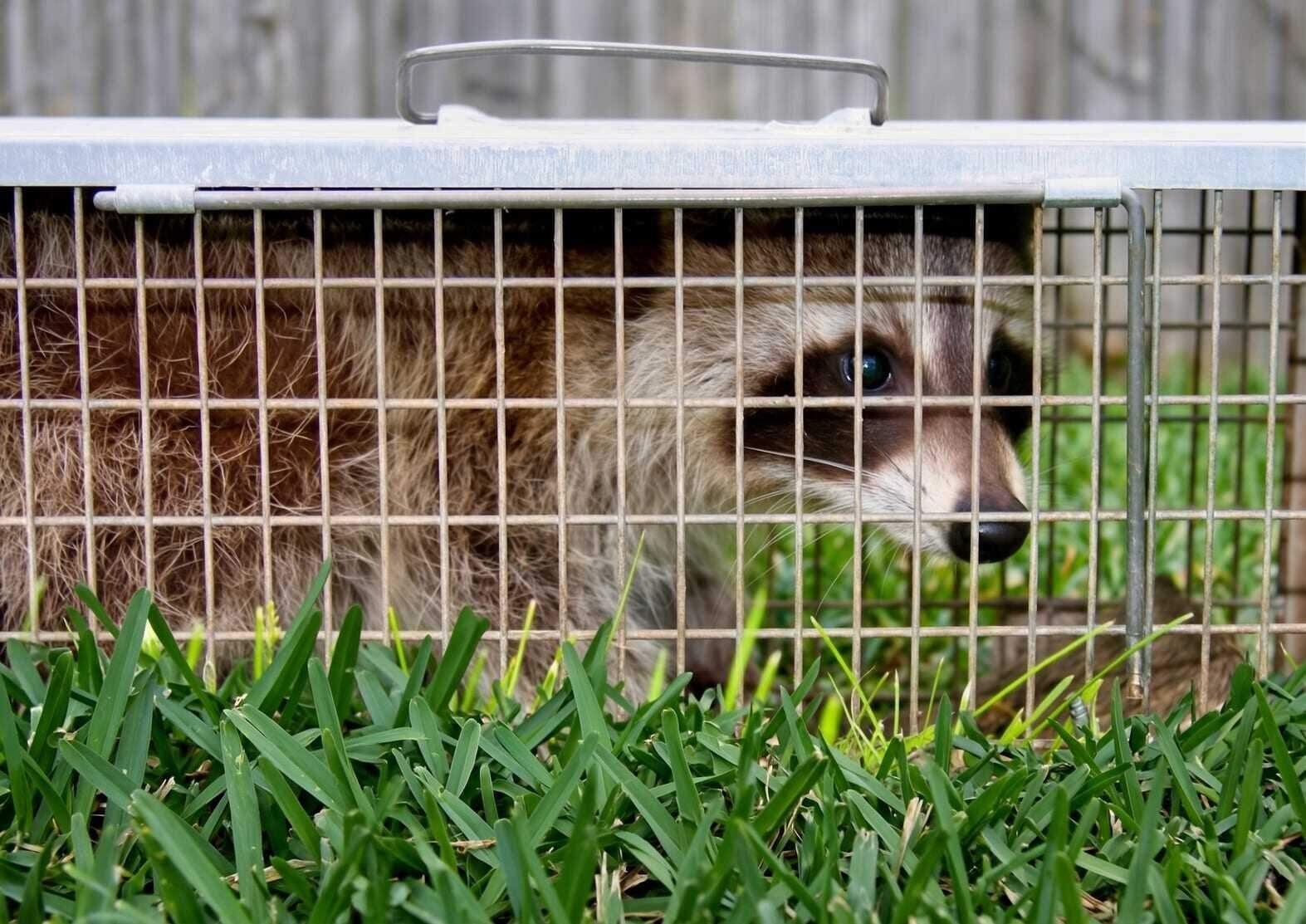
The cage trap goes where the raccoon will find it: on the roof, at the hole or along the path it travels. It is baited with fruit, marshmallow or pet food.
On some houses, a one-way door covers the hole instead. The raccoon can leave through it but cannot get back in.
If the raccoon has young, called kits, the mother is trapped and the technician lifts the kits out by hand, so none is left behind in the attic.
Nothing is closed until every raccoon is out. Because raccoons tear through chicken wire, spray foam and light aluminum screen, the closing is done in galvanized steel, held with exterior-grade fasteners:
- Soffits, eaves and roof returns. Galvanized steel flashing or hardware cloth goes over the opening.
- Attic and foundation vents. Texas A&M advises screening them, and the screen is galvanized hardware cloth.
- The chimney. A cap goes on top.
Then comes the cleanup. The droppings are removed from the latrine, and insulation the raccoons soiled is replaced.
Signs of a Raccoon in the Attic
Listen overhead and look along the roofline for these:
- Heavy steps or thumps over the ceiling at night, too loud for a mouse.
- High-pitched chirping from the attic, a wall or the chimney in late winter or spring. That is young raccoons.
- A soffit hanging loose, shingles pulled up at the roof edge, or a bent vent cover.
- Droppings piled in one spot in the attic, on the roof or on a deck. That spot is a latrine.
- Trash bin lids pried or knocked off overnight.
Light, quick scratching overhead can be roof rats instead, and our rat control covers them.
Leave the droppings and the den alone, and leave the hole open so no raccoon is shut inside. Then call (972) 573-9907 at whatever hour you hear it.
Raccoon Control Across Dallas–Fort Worth
We do raccoon control across Dallas, Collin, Tarrant and Denton counties: Dallas, Fort Worth and the suburbs between them. A raccoon in a McKinney attic comes out the same way as one in Arlington.
We work on homes only, meaning houses, townhomes and apartments people live in. Every town we cover is listed on the service areas page. For raccoon removal in Dallas or any of those towns, call (972) 573-9907.
Questions About Raccoons
How much will it cost to get the raccoon out?
We price it at the inspection, because the cost of raccoon removal turns on the house. One raccoon behind a torn soffit is a smaller job than a mother with kits, three openings and an uncapped chimney.
How long does it take?
A single visit usually takes 30 minutes to two hours, depending on the size of the house. Getting a raccoon out takes more than one: the trap or the door goes up first, and the closing follows once the raccoons are out. How soon a raccoon walks into a trap is up to the raccoon.
Can a raccoon make my kids or my dog sick?
It can, so keep children and pets away from the raccoon and its droppings. The droppings can carry roundworm eggs, which become infectious after 2 to 4 weeks. People catch it by swallowing them, mostly young children who put dirt in their mouths. The CDC calls such cases rare but sometimes serious. A cornered raccoon will also bite or scratch, and it can pass rabies to people and pets. Never pick up the droppings with bare hands.
Can I just set a trap myself?
You can. Texas lets you trap a raccoon that is damaging your house at any time of year, and Frisco's animal services even lends traps to residents. Moving it is the catch. Texas treats the raccoon as a rabies carrier, so driving a live one off to let it go is a Class C misdemeanor unless the state exempts you. A trap also leaves any kits behind and the hole open. Professional raccoon removal takes care of both.
What if it rains?
Rain does not stop the trapping. Closing the openings is roof work, though, so a wet roof can push that part to a dry day.
What should I do before the visit?
Clear the way to the attic hatch or the pull-down stairs. Then take away the food, as Texas A&M advises. Feed pets in the morning and clean up what they leave, empty water bowls at night and bring bird feeders in after dark. Keep the lids tight on the trash bins, too.
Raccoons tear through foam and chicken wire. We close the way in with steel.
Call us with what you have heard, and we book the inspection that starts your raccoon removal.