
Skunk Removal in Dallas, TX
Skunk control for Dallas–Fort Worth homes with a den under the porch, the deck or the slab.
- The den and any litter found
- Cage trap or one-way door
- Den closed with buried wire
- A person answers, 24/7
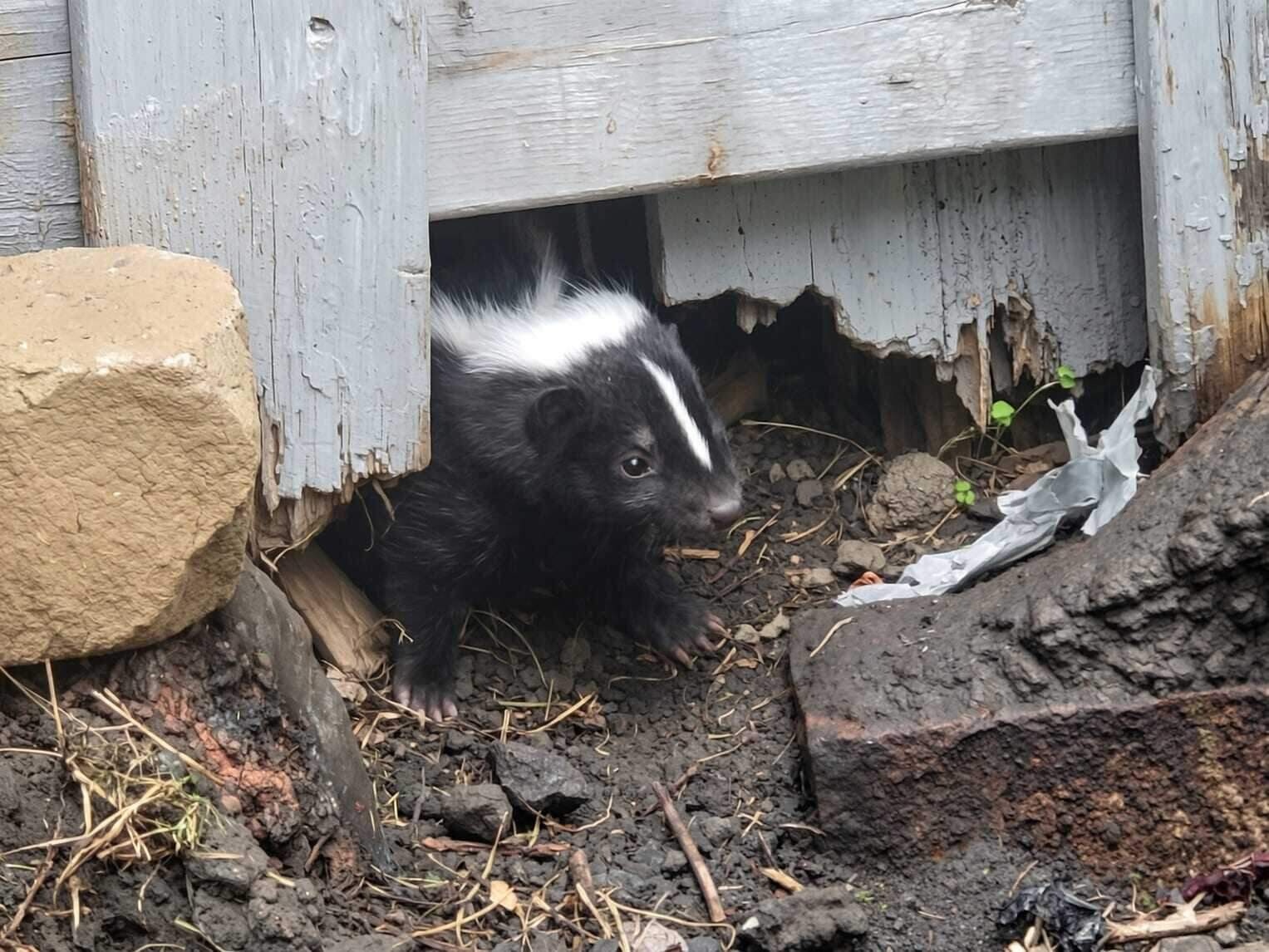
Skunk Removal Services for Dallas Homes
Our skunk removal starts with an inspection of the places skunks den: under porches, decks and sheds, in gaps in the foundation and, less often, the attic. The technician finds the den, every hole it uses and whether young are inside. You hear the price after the inspection, and nothing is set or sealed until you say yes.
The skunk leaves through a one-way door over its hole, or goes out in a covered cage trap. When the tracks show the den is empty, the hole is closed for good with wire buried in the ground.
You also get the findings in writing after the visit: what we found, what we used and where.
We answer 24/7, so you can call the night you first smell it near the foundation.
 LicensedIn the state
of Texas InspectBefore any
work starts WrittenReport after
the visit
How We Get a Skunk Out, Step by Step
-
1
Call and tell us what you noticed
We ask what you have seen or smelled and where, such as a musky smell by the foundation at night or a fresh hole under the deck. We ask about dogs, cats and small children, too.
-
2
Find the den and any young
The technician checks under the porch, the deck and the shed, along the foundation and across the yard, and the attic if the signs point there. The search turns up the den, every hole the skunk uses and any kits inside. A mother is never taken from her litter.
-
3
See the den, then hear the price
You see where the skunk is living and how it gets in, then you hear the price for the whole job. The work waits for your yes.
-
4
Get the skunk out
A one-way door goes over the main hole while the other gaps are sealed, or a covered cage trap goes at the opening. Flour on the ground there shows, after dark, whether the skunk has walked out.
-
5
Close the den for good
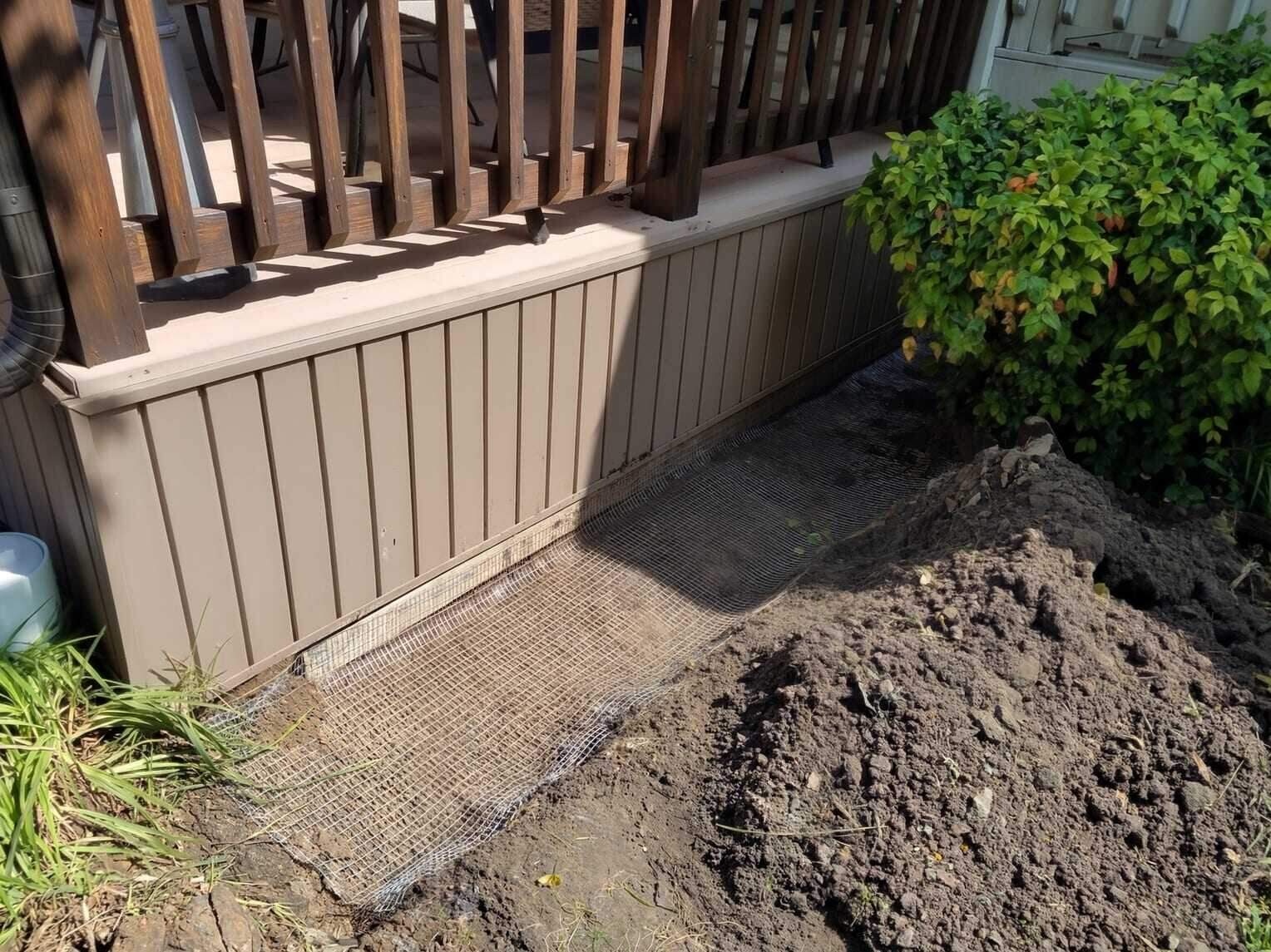
Once the den is empty, wire is buried along the opening and bent outward, or sheet metal goes over it. A deodorizer goes where the smell sits, and lime on the soil.
-
6
Get the findings
Your written findings also name what drew the skunk to the house, often pet food left outside, open garbage or fallen fruit.
To book the inspection, call (972) 573-9907, day or night.
Why Skunks Den Under DFW Homes
A skunk dens in any sheltered spot, and in Dallas–Fort Worth that often means the space under a house, a porch or a deck. Texas A&M AgriLife Extension also lists old armadillo burrows, the old dens of other animals and unused buildings.
Food keeps it close. Skunks feed at night on grubs, insects and rodents, and in town on pet food, garbage and fruit that has fallen in the yard.
Late winter is the busy season here. Skunks breed from late February through March, and a female then digs in under front steps, a deck or a shed for her litter of four to six kits, born in spring. Dallas companies see more dens dug under porches and decks in the fall.
Most DFW houses sit on a concrete slab, so a skunk digs in at the edges: beside the porch, under the front steps or into a gap in the foundation. An older pier-and-beam house has a crawl space under the floor, and a skunk can move right in.
Getting the Skunk Out, Then Closing the Den
Skunk control is two jobs done in a fixed order. Eviction gets the skunk out, and exclusion then closes the den so no other skunk can dig back in. Closing it first would shut the skunk inside.
Texas allows trapping a skunk at any time when it causes damage or a nuisance, and one denning under a house is a nuisance. A skunk just crossing the yard at night is left alone.
- One-way door. It goes over the main hole, and every other gap is sealed at the same time. The skunk leaves at night to feed and cannot get back in.
- Covered cage trap. The cover keeps the skunk calm, so it rarely sprays, and the technician can see what is inside before the trap is moved.
- Flour at the hole. Tracks in the flour after dark show which holes are exits, how many skunks use them and when the den is empty.
- Wire buried in an L. Hardware cloth or welded wire goes 12 inches into the ground along the opening, with the bottom bent outward. A skunk that digs at the edge hits wire. Sheet metal closes some openings instead.
- The smell. A commercial deodorizer goes where the odor sits, and lime goes on the soil.
If kits are in the den, the whole family has to be out before it is closed.
Signs of a Skunk Under the House
Each of these points to a skunk living under the house, the porch or the deck:
- A musky smell near the foundation, strongest at night.
- A small hole or freshly dug soil along the foundation, under the front steps or beside a shed.
- Droppings near the opening.
- Scratch marks around the hole.
- Rustling under the floor or the porch after dark.
Keep children and pets away from the hole. Skunks are a primary source of rabies in Texas. State health officials see a common pattern: a rabid skunk bites dogs or cats in a neighborhood, and children, being closest to pets, are bitten most often.
The spray carries no rabies virus, but a bite or a scratch that breaks the skin can. Every animal bite to a person has to be reported to the local rabies control authority.
Skunks rarely get into an attic. Footsteps over the ceiling at night can mean roof rats instead, and our rodent control covers those.
Leave the hole and the soil around it as they are, because the tracks there show the technician which way the skunk goes. Then call (972) 573-9907.
Skunk Control Across Dallas–Fort Worth
Our skunk removal services cover Dallas, Collin, Tarrant and Denton counties, from Dallas and Fort Worth to the suburbs between them. A den under a deck in Frisco gets the same visit as one under a porch in Arlington. We take homes only: houses, townhomes and apartments people live in, not shops or offices.
Every town we serve is on the service areas page. We are a local company based in Dallas; for skunk removal in Dallas or anywhere in the four counties, call (972) 573-9907.
Questions About Skunks
How much will it cost?
The price comes after the inspection. It depends on what the technician finds: one hole under the front steps is a smaller job than a deck open on every side, with wire to bury along all of them, or a den with a litter inside.
How long does it take?
The inspection itself usually takes 30 minutes to two hours. The whole job takes longer, because the den is closed only after the flour shows the skunk is gone, and that can take more than one night. If there are kits, they have to be out too.
Will it spray while you get it out?
Rarely. A skunk seldom sprays in a covered cage trap, and the technician moves toward it slowly and quietly. Since a skunk can spray several times and reach about 10 feet, keep children and pets inside while the trap is moved.
Can I trap it myself?
You can, but the trap is the small part. Pest control for skunks is mostly the rest: checking for kits, moving the skunk without getting sprayed and burying wire so the den stays shut. A homeowner who live-traps a skunk and moves it must also notify Texas Parks and Wildlife.
What if it rains?
Rain washes out the flour, so the check that the den is empty waits for a dry night. Heavy rain can also push the digging for the wire to another day.
What should I do before the visit?
Bring pet food in at night and keep the lid on the garbage, so nothing feeds the skunk while it is moving out. Clear anything stored against the deck or the crawl space door, so the technician can reach every side.
A skunk leaves by its own hole. Then we close it for good.
Call and tell us where the hole is: skunk removal starts with the inspection, and the price comes first.